History of Nagar Samaj
Legend has it, this land (along with money) was awarded to the Nagars by King Chamatkar of Anarta for having saved his life. According to the story, the King was out on a hunt when he killed a deer suckling her young. The deer placed a curse on the King. As a result of the curse, the King developed leukoderma. In the area, lived a small village of Brahmins, who, with the use of herbs, cured the King of his illness. King Chamatkar was thankful and offered them, as a reward, money and land. The Brahmins were men of high principle and believed in austere living; they refused the Kings offerings. The queen then went to the village and spoke with the wives of the Brahmin. She persuaded 68 of the 72 into accepting the offer. The four who refused, left the village for the Himalayas with their family. Those who remained are called the founders of the Nagar family descendant identity or "Gotra". Another version of the legend claims the King of Anarta rebuilt an abandoned city, Chamatkarpur, and consecrated a temple to Hatkeshwar to show his gratitude to the Brahmins. Through the years, and many name changes, the town is currently known as Vadnagar. The inhabitants of the city were known as Nagars. As time passed, the city of Vadnagar was invaded on more than one occasion. Nagars sought refuge in the nearby areas of Saurashtra and Rajasthan. During this time, they did their best to observe and preserve the code, to guard their identity. After King Vishaldev conquered Gujarat (around A.C.E. 1040), the King of Ajmer established the cities of Vishnagar (formerly Vishalnagar), Chitrod (or Chitakutpati), Prashnipur, Krashnor, and Sathod (or Shatpad). He offered these cities to the Brahmins who were descendants or an offshoot of the Nagars from Vadnagar. As per the origin place of the Nagars, gradually they are called with. Like Visnagara from Visnagar, Vadnagara from Vadnagar, Prashnora from Prashnipur (Rajasthan) now settled in Bhavnagar and other region in Gujarat, Krashnora from Krashnor, Sathodara from Shatpad etc. The Nagar community and Shree HATKESHVAR Mahadev are considered to be synonyms. - inseparable. Wherever a Nagar family or community sattles, there will invariably be The HATKESHVAR temple nearby. There are many legends popular for the origin of Shree HATKESHVAR. Once Lord Shiva, feeling lonely due to separation from Parvati, was moving nude. With his " Kapalpatra " ( begging bowl ) he came in the hermitage of Saints. The wives of Saints got attracted towards him and followed him. Knowing this, the Saintsgotvery upset and cursed Lord Shiva that his organ should fall off from his body. It so happened and the organwentintodeepearth.
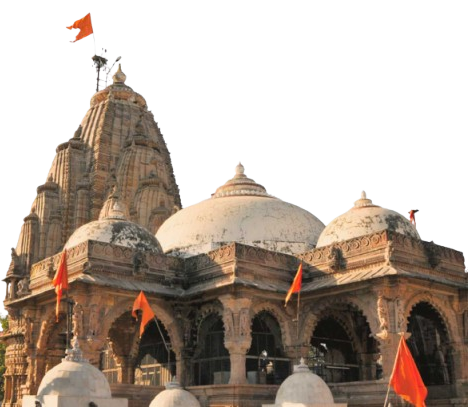
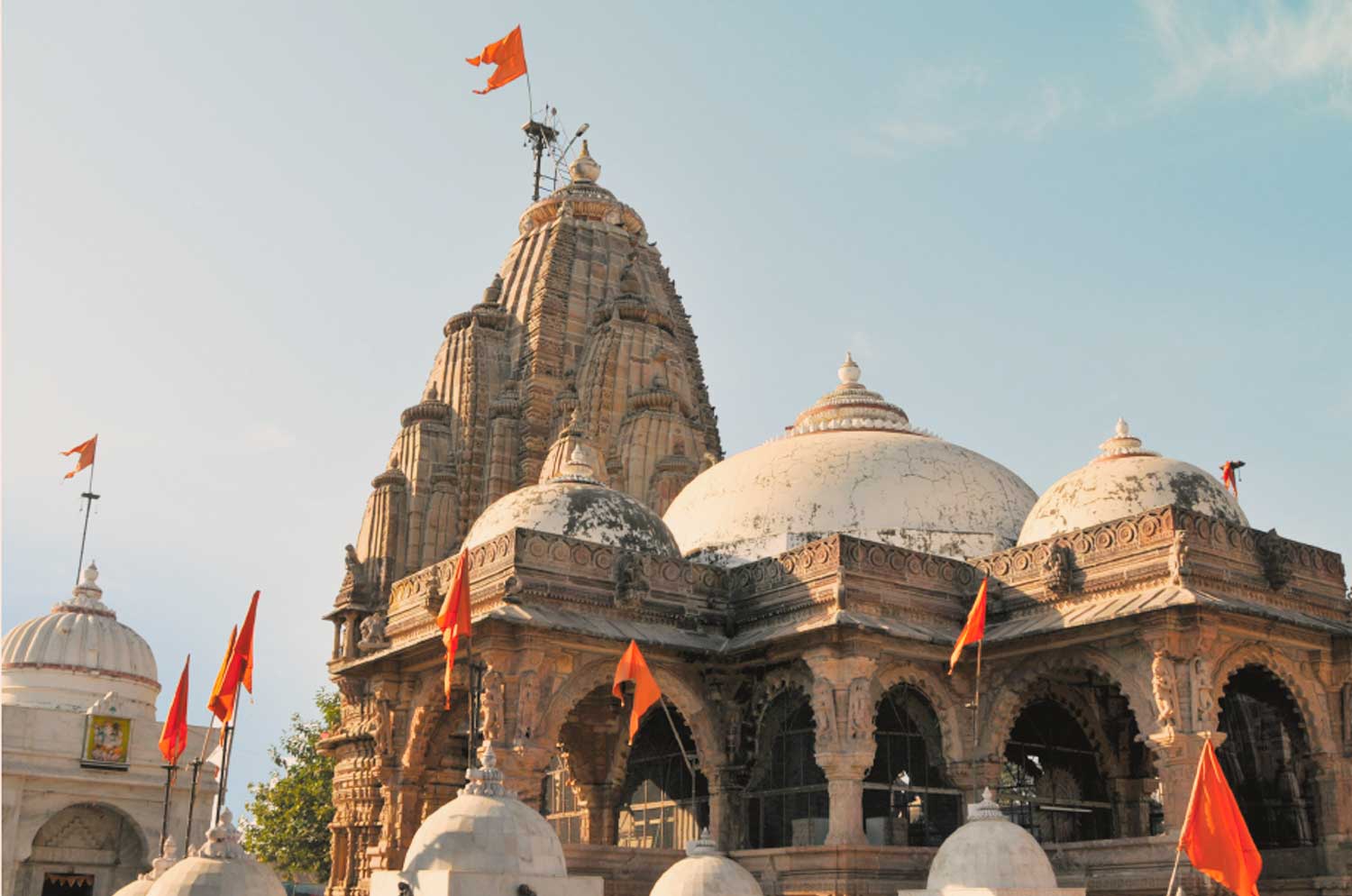
The temple's inner sanctum houses a Shiva linga said to have self-emerged (swayambhu). From the roof of the sanctum a massive shikhar soars high into the sky. Facing east, the temple is enclosed by a high wall topped by three circular domes interspersed with flat stretches in the Indo-Saracenic tradition. The exterior of the temple is exquisitely ornamented with figures of the nine planets, musicians, evocative dancing apsaras, regent deities, the chief gods of the Hindu pantheon, scenes from the Ramayana and Mahabharata, and varied animal and floral motifs. The premises also have an ancient Kashivishveshvara Shiva temple, a Swaminarayan temple and two Jain temples